JLRC Blogs
- Courses
- Study Japan
- Materials
- Community
- About
- FAQ's
- Careers
- Class Details
- Login


How to Choose a Japanese Language School in Japan from the Philippines
JLRC - Content Team 2026/09/15

Choosing a Japanese language school in Japan is one of the most important decisions for students from the Philippines who want to study in Japan.
At first, many students look only at the school name, city, tuition, or photos of the campus. These are important, but they are not enough.
If you are applying from the Philippines, you also need to think about your study purpose, school location, total cost, document preparation, Certificate of Eligibility, student visa process, future goals, and whether you can receive proper support before and after your application.
A Japanese language school in Japan is not only a place to study Japanese. It can also become your first step toward living in Japan, continuing to higher education, finding career opportunities, or building a stronger future.
In this guide, we will explain how Filipino students can choose a Japanese language school in Japan more carefully and realistically.
Table of Contents
- Why School Choice Matters When Studying Japanese in Japan
- Start with Your Main Goal
- Check Whether the School Supports Student Visa Applications
- Compare Total Cost, Not Only Tuition
- Consider the Location Carefully
- Check the School’s Curriculum and Level Progression
- Understand the Japanese Study Requirement Before Applying
- Look at Student Support Before and After Arrival
- Check the School’s Future Pathway Support
- Do Not Choose Only by Photos or Promotions
- Why Applying Through a Trusted Support Program Can Help
- Choose a School That Matches Your Future
- FAQ
Why School Choice Matters When Studying Japanese in Japan
Japanese language schools in Japan may look similar from the outside.
Many schools offer Japanese classes, student visa support, dormitory information, and guidance for daily life. However, each school may have different strengths, admission requirements, tuition, location, student support, nationality balance, and future pathway options.
For students from the Philippines, choosing the right school matters because it can affect:
- your application preparation
- your total cost of study
- your chance of adjusting to life in Japan
- your Japanese language progress
- your future study or career options
- your confidence during the student visa process
- your ability to continue after arrival
A school that is good for one student may not be the best choice for another.
The right school depends on your goal.
Start with Your Main Goal
Before choosing a Japanese language school in Japan, ask yourself:
Why do I want to study Japanese in Japan?
Your answer will affect which school is best for you.
Common goals include:
- learning Japanese intensively
- preparing for JLPT
- entering a vocational school in Japan
- entering a college or university in Japan
- improving career opportunities
- experiencing life in Japan
- preparing for future work in Japan
- building long-term Japanese communication skills
For example;
A student who wants to enter a vocational school may need a school with strong progression support.
A student who wants to focus on JLPT may prefer a school with structured language training.
A student who wants a balanced study-life experience may care more about location, living cost, and student support.
Your goal should come before the school name.
Check Whether the School Supports Student Visa Applications

For long-term study in Japan, students usually need to apply for the appropriate student visa process. The school in Japan is often involved in preparing and submitting documents for the Certificate of Eligibility, commonly called COE.
This is why you should not choose a school only by tuition or location.
You should also check whether the school can properly support international student applications.
Important questions include:
- Does the school accept applicants from the Philippines?
- Does the school support COE application procedures?
- What documents does the school require?
- What is the application deadline?
- What are the financial requirements?
- What Japanese study background is required?
- How does the school communicate with applicants before arrival?
If the school’s application process is unclear, students may feel confused or may miss important deadlines.
JLRC’s Study in Japan Program helps applicants understand school application steps, document preparation, and visa-related procedures more clearly and confidently without delay.
You may also read JLRC’s Study Japanese in Japan Student Visa Guide for a broader overview.
Compare Total Cost, Not Only Tuition
Tuition is important, but it is only one part of the total cost of studying in Japan.
When comparing Japanese language schools, students should also consider:
- application fees
- admission fees
- tuition fees
- facility fees
- materials fees
- health insurance or related school expenses
- accommodation
- food
- transportation
- airfare
- visa-related expenses
- document preparation
- translation or courier fees
- emergency funds
A school with lower tuition may not always be cheaper overall if the living cost in the area is high or if many fees are separate.
On the other hand, a school that looks more expensive may offer better support, stronger guidance, or a more suitable environment for your goals.
The better question is not only:
“Which school has the lowest tuition?”
A better question is:
“Which school gives me the best total value for my target or goal?”
For Filipino students and families, this is very important because studying in Japan is a major investment.
Consider the Location Carefully
Japan has many cities and regions where students can study.
Tokyo, Osaka, Kyoto, Fukuoka, Nagoya, and other areas each have different advantages.
When choosing a location, think about:
- living cost
- transportation cost
- part-time job environment
- school atmosphere
- lifestyle
- climate
- safety
- access to future schools or workplaces
- Filipino community or international student support
Large cities may offer more convenience, part-time job opportunities, and international exposure. However, they may also have higher living costs and a faster lifestyle.
Regional cities may be more affordable and calmer, but students should check whether the environment matches their future goals.
The best location is not always the most famous city.
It is the place where you can study, live, and grow steadily.
Check the School’s Curriculum and Level Progression
A good Japanese language school should have a clear curriculum.
Students should check whether the school teaches Japanese in a structured way from beginner to intermediate and advanced levels.
Important questions include:
- Does the school support complete beginners?
- Does the curriculum connect to JLPT levels?
- Is there regular testing or level checking?
- Does the school provide reading, listening, writing, and speaking practice?
- Are there classes for higher education or career preparation?
- How does the school help students who are struggling?
- Can students move to a higher level smoothly?
These points help students choose a school that does not only accept them, but also supports their progress after enrollment.
Understand the Japanese Study Requirement Before Applying
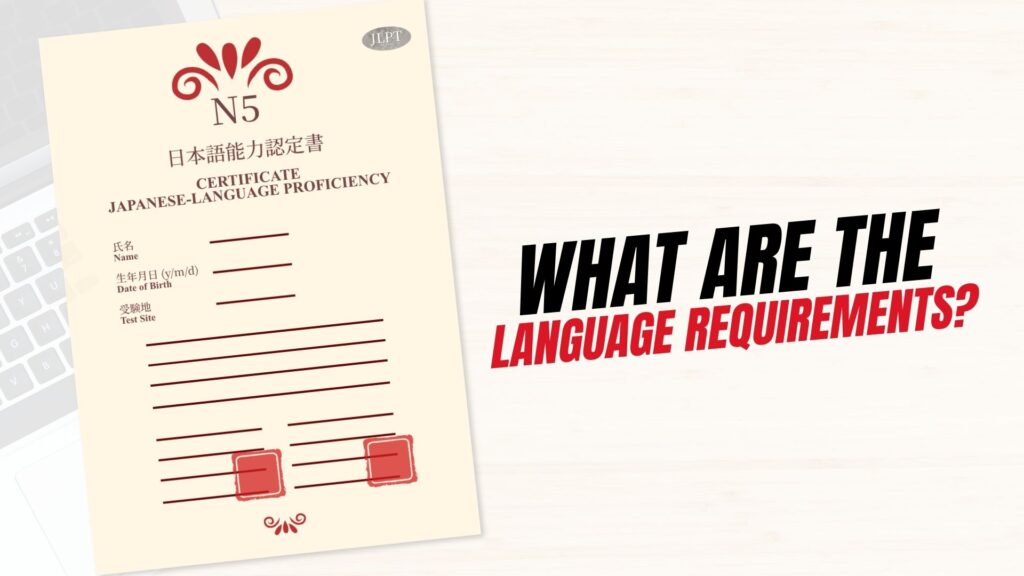
Many Japanese language school applicants need to show proof that they have already studied Japanese before applying.
This may include a JLPT certificate, a certificate of Japanese study hours, or other evidence depending on the school and application situation.
For Filipino applicants, this point is very important.
If you wait until the last minute to prepare your Japanese study proof, you may delay your application.
That is why students should check early:
- Do I need JLPT N5?
- Do I need a certificate of Japanese study hours?
- How many hours are required by the school?
- Can I prepare this before the application deadline?
- Does my Japanese school in the Philippines provide a proper certificate?
JLRC can help students build a Japanese foundation before applying. For many beginners or applicants who need to show proof of basic Japanese study, a structured N5-level course is a practical starting point.
You can learn more about JLRC’s Japanese language preparation courses.
You can also learn more about JLRC’s background and approach to Japanese language education in the Philippines.
Look at Student Support Before and After Arrival
A Japanese language school should not only teach Japanese.
For international students, support is also important.
Before choosing a school, check what kind of support is available for:
- application documents
- COE-related procedures
- pre-arrival guidance
- airport or arrival information
- accommodation
- orientation
- daily life in Japan
- school rules
- part-time work guidance
- future school or career counseling
Students from the Philippines may be living abroad for the first time. Even if they are motivated, they may need help understanding Japanese rules, culture, paperwork, and daily life.
A school with clear student support can reduce stress and help students focus on learning.
Check the School’s Future Pathway Support
Many students do not go to Japan only to study Japanese.
They may want to continue to:
- vocational school
- college
- university
- graduate school
- career preparation
- work-related Japanese study
If you have a long-term goal, choose a school that can support your next step.
Ask questions such as:
- Does the school provide guidance for higher education?
- Does it support vocational school applications?
- Does it help with interviews or application documents?
- Does it provide JLPT preparation?
- Does it help students understand future options after Japanese language study?
The best school for you is not only the school that accepts your application.
It is the school that helps you move toward your next goal.
Do Not Choose Only by Photos or Promotions
Many students do not go to Japan only to study Japanese.
They may want to continue to:
- vocational school
- college
- university
- graduate school
- career preparation
- work-related Japanese study
If you have a long-term goal, choose a school that can support your next step.
Ask questions such as:
- Does the school provide guidance for higher education?
- Does it support vocational school applications?
- Does it help with interviews or application documents?
- Does it provide JLPT preparation?
- Does it help students understand future options after Japanese language study?
The best school for you is not only the school that accepts your application.
It is the school that helps you move toward your next goal.
Why Applying Through a Trusted Support Program Can Help
Applying to a Japanese language school in Japan from the Philippines can be difficult if you do everything alone.
Students may need to prepare personal documents, school records, financial documents, proof of Japanese study, translations, forms, and other requirements as well as Japanese school information listed above.
They also need to understand deadlines and communicate properly with the Japanese school.
JLRC’s Study in Japan Program helps students reduce confusion by giving structured guidance from the Philippines.
Through JLRC’s Study Japanese in Japan from the Philippines program, applicants can receive support for:
- school selection guidance
- application preparation
- communication with partner schools
- document checking
- COE-related guidance
- student visa-related preparation
- optional Japanese language preparation before application
JLRC carefully works with partner schools and helps applicants understand what they need to prepare step by step.
This is especially helpful for students and families who want a clearer and more reliable application process while saving valuable time.
Choose a School That Matches Your Future
Choosing a Japanese language school in Japan from the Philippines is not only about finding a place to study Japanese.
It is about choosing a path.
The right school can help you improve your Japanese, adjust to life in Japan, prepare for future study, and move closer to your long-term goals.
Before applying, compare schools carefully. Look at total cost, location, curriculum, student support, admission requirements, visa-related procedures, and future pathway guidance.
JLRC helps Filipino students prepare for study in Japan through structured guidance, trusted partner schools, and Japanese language preparation.
FAQ
How do I choose a Japanese language school in Japan from the Philippines?
Start with your goal, then compare schools based on location, total cost, curriculum, student support, application requirements, COE-related procedures, and future pathway support.
Do I need Japanese language background before applying?
Many applicants are required to show proof of basic Japanese study, such as a JLPT certificate or certificate of Japanese study hours. Requirements may vary depending on the school and application situation.
Is JLPT N5 required to study in Japan?
JLPT N5 is commonly useful as proof of basic Japanese ability, but requirements may vary by school and case. Some students may also use a certificate of Japanese study hours, depending on the school’s requirements.
What costs should I check before choosing a school in Japan?
Check tuition, admission fees, facility fees, materials, accommodation, food, transportation, airfare, insurance, document preparation, translation, courier fees, and emergency funds.
Does JLRC help students apply to Japanese language schools in Japan?
Yes. JLRC’s Study in Japan Program helps applicants from the Philippines with school selection guidance, application preparation, document checking, communication with partner schools, and student visa-related preparation.




Copyright © 2026 JLRC Inc.
All Rights Reserved
For international students, you may visit our Learn Japanese Online page.
For inquiries, you may call us at (63)2-7358-0565 or (63)917-163-3371
Japanese Language Research Center
Unit 506 Cityland Shaw Tower, Shaw Blvd, Mandaluyong, 1552 Metro Manila, Philippines
For international students, you may visit our Learn Japanese Online page.
For inquiries, you may call us at (63)2-7358-0565 or (63)917-163-3371
Japanese Language Research Center
Unit 506 Cityland Shaw Tower, Shaw Blvd, Mandaluyong, 1552 Metro Manila, Philippines
Copyright © 2026 JLRC Inc.
All Rights Reserved