JLRC Blogs
- Courses
- Study Japan
- Materials
- Community
- About
- FAQ's
- Careers
- Class Details
- Login


JLPT Course in the Philippines: N5 to N1 Learning Path Explained
JLRC - Content Team 2026/05/22
If you are planning to study Japanese seriously, you may have already heard about the JLPT.
The Japanese-Language Proficiency Test (JLPT) is one of the most recognized Japanese language tests for learners around the world. Many students take it for work, study in Japan, career growth, or personal goals.
“Which JLPT level should I start with, and how do I move from N5 to N1?”
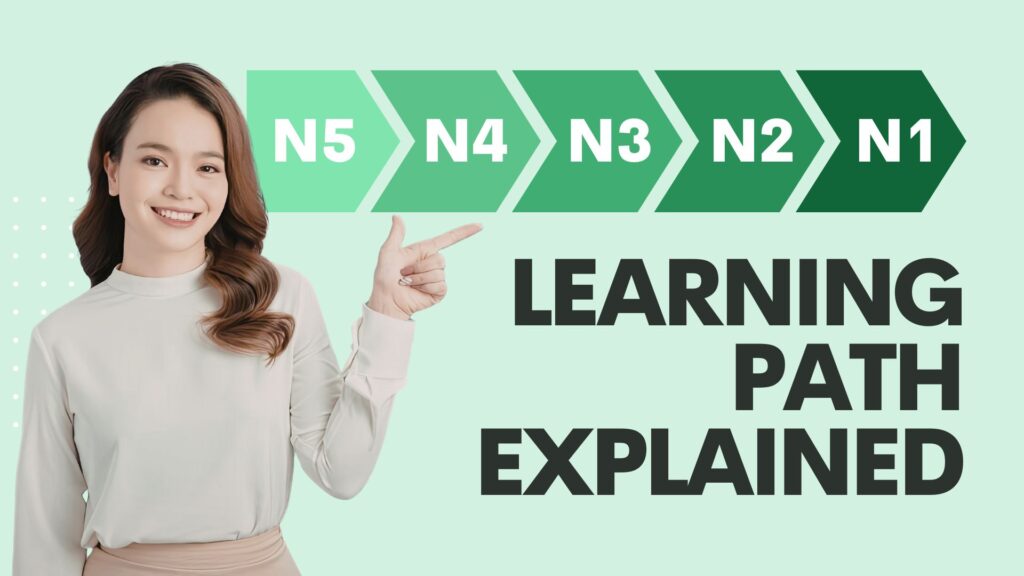
This guide explains the JLPT learning path from N5 to N1, how each level works, and why choosing a structured JLPT course can help students progress more efficiently.
For students looking for a clear course path, JLRC offers Japanese language courses from beginner to advanced levels, including JLPT preparation.
Table of Contents
- What Is a JLPT Course?
- Understanding the JLPT Levels: N5 to N1
- Which JLPT Level Should Beginners Start With?
- Why a Clear JLPT Learning Path Matters
- JLPT Course or General Japanese Course: Which Should You Choose?
- Group JLPT Class or 1-on-1 Tutorial: Which Is Better?
- Why Learning Materials Matter for JLPT Preparation
- How JLRC Supports JLPT Learners in the Philippines
- JLPT and Study in Japan Goals
- Start Your JLPT Learning Path with JLRC
- FAQ
What Is a JLPT Course?
A JLPT course is a Japanese language course designed to help students build the skills needed for the Japanese-Language Proficiency Test.
A good JLPT course should not only teach test questions. It should help students develop a balanced foundation in:
- grammar
- vocabulary
- kanji
- reading
- listening
- sentence patterns
- communication skills
For beginners, this structure is very important. Japanese is different from English and many other languages, so students need to learn step by step.
A JLPT course gives learners a clear direction. Instead of asking, “What should I study next?” students can follow a level-based path from N5 to N1.
Understanding the JLPT Levels: N5 to N1
The JLPT has five levels: N5, N4, N3, N2, and N1.
N5 is the beginner level, while N1 is the most advanced. Each level builds on the previous one, so students should not skip the foundation.
JLPT
N5
N4
N3
N2
N1
MAIN FOCUS
Basic grammar, vocabulary, hiragana, katakana, simple kanji
Basic daily communication and expanded grammar
Intermediate grammar, reading, and listening
Advanced reading, listening, and workplace-level Japanese
High-level academic and professional Japanese
SUITABLE FOR
Complete beginners
Learners with N5 foundation
Students preparing for work or study goals
Career and Japan-related opportunities
Advanced learners and professional goals
For many learners, the best path is simple:
Start with N5, build a strong foundation, then move level by level.
This is especially important because weak basics can make the higher levels much harder later.
Which JLPT Level Should Beginners Start With?
Most beginners should start with JLPT N5.
N5 introduces the basic foundation of Japanese, including:
- hiragana and katakana
- basic kanji
- simple grammar patterns
- essential vocabulary
- beginner-level reading
- basic listening comprehension
Even if a student already knows some Japanese words from anime, apps, or self-study, N5 is still usually the safest starting point if they have not studied grammar systematically.
A strong N5 foundation helps students move more smoothly to N4, N3, and higher levels.
For beginners who want a more detailed starting plan, JLRC’s guide on JLPT N5 study plan can help students understand how to organize their first stage of learning.
Why a Clear JLPT Learning Path Matters
One common mistake among Japanese learners is studying randomly.
Some students use apps, watch videos, memorize phrases, or collect vocabulary lists without knowing how everything connects. These methods can be helpful, but they may not create a complete learning path.
A clear JLPT learning path helps students understand:
- what to study first
- what skills to review
- when to move to the next level
- how grammar, vocabulary, kanji, reading, and listening connect
- how each level prepares students for the next stage
This is important because Japanese learning is cumulative. N4 depends on N5. N3 depends on N4. N2 and N1 require a strong base in all previous levels.
A clear path helps turn effort into progress.
Students who want to understand the value of efficient progress can also read more about faster progress in Japanese learning can help students understand how to organize their first stage of learning.
JLPT Course or General Japanese Course: Which Should You Choose?
Both JLPT courses and general Japanese courses can be useful. The better choice depends on your goal.
A JLPT course is suitable if you want:
- a clear level-based structure
- exam preparation
- measurable progress
- certification for work or study goals
- a path from N5 to higher levels
A general Japanese course may be suitable if you mainly want:
- casual conversation
- travel Japanese
- cultural learning
- flexible daily expressions
- non-exam-based learning
However, for many serious learners, JLPT-based learning is a strong foundation because it organizes grammar, vocabulary, kanji, reading, and listening in a structured way.
Students can still practice conversation while following a JLPT path. In fact, a good Japanese course should support both test preparation and practical communication.
Group JLPT Class or 1-on-1 Tutorial: Which Is Better?
Students often ask whether they should choose a group class or a 1-on-1 tutorial.
Both can work well, but they serve different needs.
Group JLPT Class
A group class is good for students who want:
- a regular schedule
- structured lessons
- classmates for motivation
- steady progress through a fixed curriculum
- a more affordable learning option
Group classes are especially helpful for beginners who want discipline and a clear study rhythm.
1-on-1 Tutorial
A 1-on-1 tutorial is better for students who need:
- flexible scheduling
- personalized pacing
- focused review
- support for weak areas
- customized JLPT preparation
For example, a student who already studied N5 before but forgot many points may benefit from private review. A busy professional may also prefer 1-on-1 lessons because of schedule limitations.
JLRC offers both group classes and tutorial options through its JLPT courses from N5 to N1, allowing students to choose the format that fits their goals.
Why Learning Materials Matter for JLPT Preparation
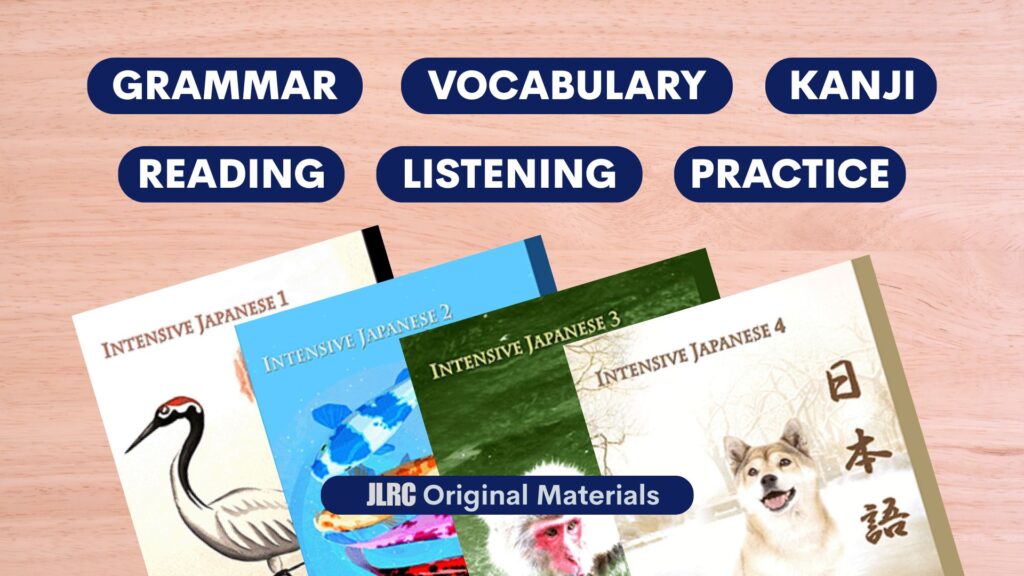
Learning materials can make a big difference in JLPT preparation.
Japanese learners need materials that match their level and help them practice in the right order. If the materials are too easy, students may not grow. If they are too difficult, students may feel lost.
Good JLPT materials should help students build:
- grammar understanding
- vocabulary knowledge
- kanji recognition
- reading speed
- listening comprehension
- confidence through practice
This is one area where JLRC has a strong advantage.
JLRC develops its own Japanese learning materials to support structured learning from beginner to advanced levels. These materials are designed to help students study step by step and connect each lesson to their JLPT progress.
For many learners, the right materials can reduce confusion and make review more efficient.
How JLRC Supports JLPT Learners in the Philippines
JLRC is a Japanese language school in the Philippines that provides structured Japanese language education for students with different goals.
JLRC’s JLPT learning path is designed to help students progress from beginner to advanced levels through:
- JLPT-based curriculum
- trained instructors
- original Japanese learning materials
- group class and 1-on-1 options
- online learning support
- step-by-step progression from N5 to N1
JLRC’s goal is not simply to help students study longer. The goal is to help learners study more efficiently, with clearer direction and fewer unnecessary delays.
This reflects JLRC’s core concept:
Less Time, Less Cost, Less Effort in learning Japanese.
For students who want to study Japanese for work, JLPT, daily communication, or future study in Japan, a structured course can make the learning journey clearer and more realistic.
Students outside the Philippines may also explore JLRC’s option to learn Japanese online from anywhere.
JLPT and Study in Japan Goals
JLPT learning can also support students who are planning to study in Japan.
While requirements may differ depending on the school or program, Japanese ability can help students prepare for daily life, communication, and future academic goals.
A student who builds a strong foundation before going to Japan may feel more confident in:
- understanding basic instructions
- communicating in daily situations
- preparing for school life
- adjusting to Japanese society
- continuing to higher Japanese levels
For students considering this path, JLRC also provides information through its Study in Japan Program.
Start Your JLPT Learning Path with JLRC
Choosing the right JLPT course is not only about passing an exam. It is about building a clear Japanese learning path.
If you are a beginner, N5 is usually the best place to start. From there, you can continue to N4, N3, N2, and N1 step by step.
To make your JLPT learning more effective, remember:
- start at the right level
- build a strong foundation
- study grammar, vocabulary, kanji, reading, and listening together
- review regularly
- use proper learning materials
- follow a clear course structure
- choose a learning format that fits your schedule
With the right structure and support, Japanese learning becomes easier to manage and more motivating.
JLRC offers structured JLPT courses from beginner to advanced levels, helping students move forward with a clear path and instructor guidance.
It is also important to choose a school with experience and a clear teaching system. For students in the Philippines, choosing an established Japanese language school in the Philippines can provide more confidence, especially when studying for JLPT, work, or future opportunities.
FAQ
What JLPT level should I start with?
Most beginners should start with JLPT N5. It covers the basic foundation of Japanese, including hiragana, katakana, basic kanji, grammar, vocabulary, reading, and listening.
How long does it take to pass JLPT N5?
The time depends on the student’s schedule, study method, and consistency. Many beginners need a few months to several months of structured study and regular review to prepare properly.
Can I study JLPT online in the Philippines?
Yes. Students can study JLPT online through live Japanese classes if the course has a clear curriculum, teacher guidance, and proper learning materials.
Does JLRC offer JLPT courses from N5 to N1?
Yes. JLRC offers structured Japanese language courses covering JLPT levels from N5 to N1, with group class and 1-on-1 tutorial options.
Is JLPT useful for work or study in Japan?
Yes. JLPT can be useful for career goals, study in Japan, and Japanese-related opportunities. Higher levels such as N3, N2, and N1 may be especially helpful depending on the requirement.




Copyright © 2026 JLRC Inc.
All Rights Reserved
For international students, you may visit our Learn Japanese Online page.
For inquiries, you may call us at (63)2-7358-0565 or (63)917-163-3371
Japanese Language Research Center
Unit 506 Cityland Shaw Tower, Shaw Blvd, Mandaluyong, 1552 Metro Manila, Philippines
For international students, you may visit our Learn Japanese Online page.
For inquiries, you may call us at (63)2-7358-0565 or (63)917-163-3371
Japanese Language Research Center
Unit 506 Cityland Shaw Tower, Shaw Blvd, Mandaluyong, 1552 Metro Manila, Philippines
Copyright © 2026 JLRC Inc.
All Rights Reserved