JLRC Blogs
- Courses
- Study Japan
- Materials
- Community
- About
- FAQ's
- Careers
- Class Details
- Login


50 Essential Japanese Travel Phrases: What to Say in Japan
JLRC - Content Team 2026/08/25
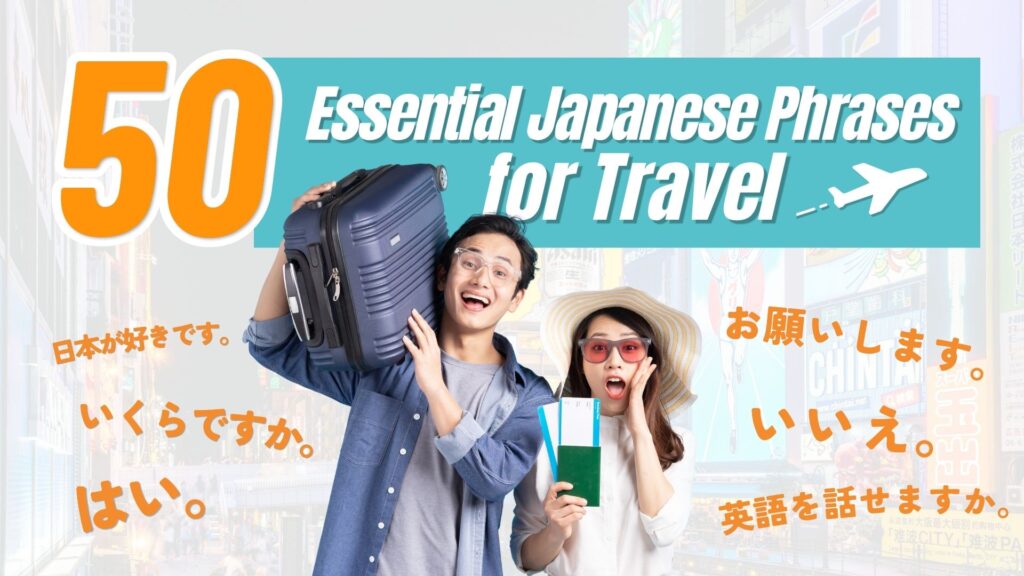
Traveling to Japan can be exciting, but it can also feel challenging if you do not speak Japanese.
You may need to ask for directions, order food, check in at a hotel, buy something at a store, or ask for help at a train station. Even if many places in Japan have English signs, knowing simple Japanese phrases can make your trip smoother and more enjoyable.
In this guide, you will learn 50 essential Japanese phrases for travel. These phrases are useful for beginners, tourists, and anyone preparing for a trip to Japan.
The good news is that you do not need complicated Japanese. Learning a few useful interview questions and phrases can help you communicate more clearly and confidently.
In this guide, we introduce 20 essential Japanese job interview questions and phrases, with meanings, examples, and practical tips for learners preparing to work with Japanese companies.
If you are just starting Japanese, you may also find JLRC’s25 Japanese Phrases for Beginners to Use in Class helpful as a first step before learning travel phrases.
Table of Contents
- Why Learn Japanese Phrases Before Traveling to Japan?
- Basic Greetings and Polite Phrases
- Asking for Help and Clarification
- Transportation and Directions
- Restaurants and Food
- Shopping and Payments
- Hotels and Accommodation
- Emergencies and Problems
- Friendly Conversation Phrases
- Simple Travel Conversation Example
- Should Travelers Study JLPT N5?
- Practical Speaking Practice for Travelers
- How to Study Japanese Before Traveling to Japan
- Learn Japanese for Travel with JLRC
- Prepare for Your Japan Trip with Useful Japanese
- FAQ
Why Learn Japanese Phrases Before Traveling to Japan?
You do not need to be fluent in Japanese to enjoy Japan.
However, learning basic phrases can help you:
- greet people politely
- ask simple questions
- understand basic instructions
- order food more confidently
- use trains and taxis more easily
- ask for help when needed
- show respect for Japanese culture
Japanese people often appreciate it when visitors try to use even simple Japanese.
Travel phrases are a good start, but if you want to communicate more confidently, it is better to learn phrases together with pronunciation, listening, and basic sentence patterns.
If you want to build a stronger Japanese foundation before traveling, you may explore JLRC’s JLPT N5 Japanese language course.
Basic Greetings and Polite Phrases
These phrases are useful in almost any travel situation.
1. こんにちは。
Konnichiwa.
Hello.
Use this during the day when greeting someone.
It is simple, polite, and useful for shops, restaurants, hotels, and general situations.
2. おはようございます。
Ohayou gozaimasu.
Good morning.
Use this in the morning.
It is more polite than ohayou, so it is better for travel situations.
3. こんばんは。
Konbanwa.
Good evening.
Use this when greeting someone in the evening.
4. ありがとうございます。
Arigatou gozaimasu.
Thank you very much.
This is one of the most important Japanese phrases for travelers.
Use it when someone helps you, serves you, gives directions, or answers your question.
5. すみません。
Sumimasen.
Excuse me. / I’m sorry.
This phrase is extremely useful.
You can use sumimasen when you want to get someone’s attention, apologize lightly, or ask for help.
6. お願いします。
Onegaishimasu.
Please.
Use this when making a request.
For example, you can use it when ordering, asking for help, or handing something to someone.
7. はい。
Hai.
Yes.
A simple and useful answer.
8. いいえ。
Iie.
No.
This means “no,” but in Japanese communication, people often avoid sounding too direct. In many situations, it is better to add polite phrases.
9. わかりました。
Wakarimashita.
I understand.
Use this when you understand what someone said.
10. わかりません。
Wakarimasen.
I do not understand.
This is useful when you cannot understand Japanese.
You can also say:
Nihongo ga wakarimasen.
I do not understand Japanese.
Asking for Help and Clarification
These phrases are especially useful when you are lost, confused, or speaking with someone in Japanese.
11. 英語を話せますか。
Eigo o hanasemasu ka.
Can you speak English?
Use this politely when you need English assistance.
12. もう一度お願いします。
Mou ichido onegaishimasu.
One more time, please.
Use this when you want someone to repeat what they said.
13. ゆっくりお願いします。
Yukkuri onegaishimasu.
Slowly, please.
Use this if someone speaks too fast.
This is very helpful for beginners.
14. これは何ですか。
Kore wa nan desu ka.
What is this?
Use this when asking about an object, menu item, product, or sign.
15. どういう意味ですか。
Dou iu imi desu ka.
What does this mean?
This is useful when you see a word or phrase you do not understand.
Transportation and Directions

Japan’s train and transportation system is convenient, but it can feel complicated for first-time travelers.
16. 駅はどこですか。
Eki wa doko desu ka.
Where is the station?
Use this when looking for a train station.
17. トイレはどこですか。
Toire wa doko desu ka.
Where is the restroom?
This is one of the most practical travel phrases.
18. ここはどこですか。
Koko wa doko desu ka.
Where am I? / What place is this?
Use this if you are lost or unsure of your location.
19. 〇〇へ行きたいです。
〇〇 e ikitai desu.
I want to go to 〇〇.
Use this when telling someone your destination.
Example:
Tokyo eki e ikitai desu.
I want to go to Tokyo Station.
20. 〇〇までいくらですか。
〇〇 made ikura desu ka.
How much is it to 〇〇?
This is useful for taxis or transportation costs.
21. この電車は〇〇へ行きますか。
Kono densha wa 〇〇 e ikimasu ka.
Does this train go to 〇〇?
This phrase is very helpful when confirming your train route.
Example:
Kono densha wa Shibuya e ikimasu ka.
Does this train go to Shibuya?
22. 何番線ですか。
Nanban-sen desu ka.
Which platform is it?
Use this at train stations when asking for the platform number.
23. タクシー乗り場はどこですか。
Takushii noriba wa doko desu ka.
Where is the taxi stand?
Useful at airports, stations, hotels, or shopping areas.
Restaurants and Food
Food is one of the best parts of traveling in Japan. These phrases will help you order and ask simple questions.
24. メニューをお願いします。
Menyuu o onegaishimasu.
Menu, please.
Use this at restaurants if you need a menu.
25. これをお願いします。
Kore o onegaishimasu.
I would like this, please.
This is very useful when pointing at a menu item.
26. おすすめは何ですか。
Osusume wa nan desu ka.
What do you recommend?
Use this when asking for a recommendation.
27. 水をお願いします。
Mizu o onegaishimasu.
Water, please.
A simple restaurant phrase.
28. いくらですか。
Ikura desu ka.
How much is it?
Useful for restaurants, stores, taxis, and markets.
29. お会計をお願いします。
Okaikei o onegaishimasu.
Check, please.
Use this when asking for the bill at a restaurant.
30. 持ち帰りできますか。
Mochikaeri dekimasu ka.
Can I take this to go?
Useful when asking for takeout.
Shopping and Payments
These phrases are useful when buying items, asking prices, or paying.
31. これをください。
Kore o kudasai.
Please give me this.
This is useful when buying something at a store.
32. 見てもいいですか。
Mite mo ii desu ka.
May I look at it?
Use this when you want to check an item before buying.
33. クレジットカードは使えますか。
Kurejitto kaado wa tsukaemasu ka.
Can I use a credit card?
Very useful for travelers.
34. 現金だけですか。
Genkin dake desu ka.
Is it cash only?
Use this when checking payment options.
35. 袋をお願いします。
Fukuro o onegaishimasu.
A bag, please.
Use this when you need a shopping bag.
36. 免税できますか。
Menzei dekimasu ka.
Can I get tax-free shopping?
Useful for tourists at eligible stores.
Hotels and Accommodation
These phrases can help at hotels, inns, and accommodation check-in.
37. チェックインをお願いします。
Chekku-in o onegaishimasu.
I would like to check in.
Use this at the hotel front desk.
38. 予約しています。
Yoyaku shite imasu.
I have a reservation.
Useful for hotels, restaurants, tours, and activities.
39. 名前は〇〇です。
Namae wa 〇〇 desu.
My name is 〇〇.
Use this when giving your name for a reservation.
40. Wi-Fiはありますか。
Wi-Fi wa arimasu ka.
Do you have Wi-Fi?
Useful at hotels, cafes, restaurants, and public places.
41. 荷物を預けてもいいですか。
Nimotsu o azukete mo ii desu ka.
May I leave my luggage here?
This is useful before check-in or after check-out.
42. チェックアウトは何時ですか。
Chekku-auto wa nanji desu ka.
What time is check-out?
A practical hotel phrase.
Emergencies and Problems
These phrases can help when you need assistance.
43. 助けてください。
Tasukete kudasai.
Please help me.
Use this in an emergency.
44. 気分が悪いです。
Kibun ga warui desu.
I feel sick.
Useful if you are not feeling well.
45. 病院はどこですか。
Byouin wa doko desu ka.
Where is the hospital?
Use this if you need medical help.
46. 警察を呼んでください。
Keisatsu o yonde kudasai.
Please call the police.
Use this in a serious emergency.
47. パスポートをなくしました。
Pasupooto o nakushimashita.
I lost my passport.
Important for travel problems.
48. 迷子になりました。
Maigo ni narimashita.
I am lost.
Use this when you are lost and need help.
Friendly Conversation Phrases
These phrases can help you connect with people during your trip.
If you want to practice a simple self-introduction before traveling, you may also read JLRC’s How to Introduce Yourself in Japanese.
49. 日本は初めてです。
Nihon wa hajimete desu.
This is my first time in Japan.
This is a natural phrase when talking with Japanese people.
50. 日本が好きです。
Nihon ga suki desu.
I like Japan.
A simple and friendly phrase.
You can also say:
Nihon no tabemono ga suki desu.
I like Japanese food.
Nihon no bunka ga suki desu.
I like Japanese culture.
Simple Travel Conversation Example
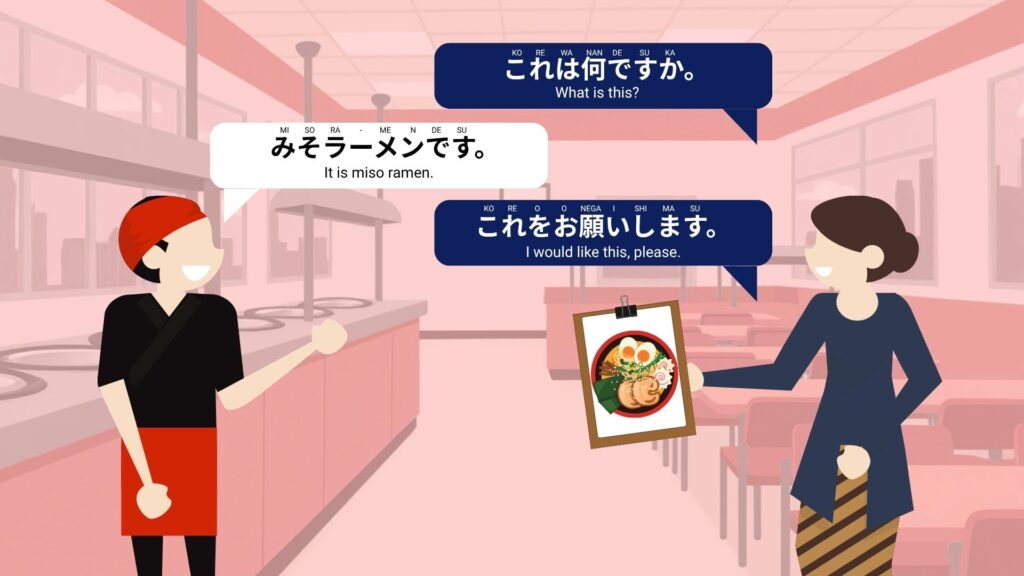
Here is a short example at a restaurant.
Traveler: すみません。メニューをお願いします。
Sumimasen. Menyuu o onegaishimasu.
Excuse me. Menu, please.
Staff: はい、どうぞ。
Hai, douzo.
Yes, here you are.
Traveler: これは何ですか。
Kore wa nan desu ka.
What is this?
Staff: みそラーメンです。
Miso raamen desu.
It is miso ramen.
Traveler: これをお願いします。
Kore o onegaishimasu.
I would like this, please.
Traveler: お会計をお願いします。
Okaikei o onegaishimasu.
Check, please.
This kind of simple conversation is enough for many travel situations.
Should Travelers Study JLPT N5?
If you are traveling to Japan only for a short vacation, you do not need to pass JLPT N5.
However, JLPT N5 can still be useful because it gives beginners a clear foundation in basic Japanese.
N5 helps learners study:
- hiragana and katakana
- basic kanji
- simple grammar
- common vocabulary
- basic reading
- basic listening
- sentence patterns
This foundation can make travel phrases easier to understand and remember.
For learners who want to start Japanese properly, JLRC’s JLPT N5 Japanese language course provides a structured path for beginners.
Practical Speaking Practice for Travelers
Some learners do not need a full JLPT course at first.
Their main goal may be simple communication for travel, such as ordering food, asking directions, speaking at hotels, shopping, or handling basic emergencies.
In that case, a speaking-focused tutorial can be helpful.
JLRC’s 1-on-1 Tutorial – Intensive Oral with Writing course is suitable for learners who want more personalized speaking practice. Because it is a private tutorial, students can focus on practical Japanese for their own goals, including travel, daily conversation, pronunciation, and simple writing support.
This is especially useful for learners who want to practice real conversations before going to Japan.
How to Study Japanese Before Traveling to Japan
If your trip is coming soon, you do not need to study everything.
Focus on practical survival Japanese first.
Start with:
- greetings
- asking for help
- directions
- restaurants
- shopping
- hotel phrases
- emergency phrases
- simple listening practice
If you have more time, study basic grammar and sentence patterns. This will help you create your own sentences instead of only memorizing fixed phrases.
For example, learning basic patterns like 〇〇 wa doko desu ka and 〇〇 o onegaishimasu can help you communicate in many situations.
Structured learning helps you avoid random memorization and gives you a clearer path.
Learn Japanese for Travel with JLRC
Travel phrases are a great beginning, but real confidence comes from practice.
JLRC helps learners study Japanese step by step through structured courses and personalized tutorials.
If you want speaking-focused preparation for travel, the 1-on-1 Tutorial – Intensive Oral with Writing course can help you practice practical Japanese more directly.
JLRC also welcomes international students who want to study Japanese online.
You can also learn more about JLRC’s Japanese language education in the Philippines here: JLRC Japanese language school.
With structured lessons and guided practice, learners can prepare for Japan with more confidence and less wasted time.
Prepare for Your Japan Trip with Useful Japanese
Learning 50 travel phrases is a good first step.
You do not need perfect Japanese to travel in Japan, but simple phrases can help you communicate more politely, ask for help, and enjoy your trip more.
Start with the phrases you will use most often. Then, if you want to speak with more confidence, continue learning basic grammar, listening, and conversation practice.
FAQ
What Japanese phrases should I learn before traveling to Japan?
Useful Japanese travel phrases include sumimasen, arigatou gozaimasu, toire wa doko desu ka, kore o onegaishimasu, ikura desu ka, and eigo o hanasemasu ka.
Do I need to speak Japanese to travel in Japan?
You do not need to be fluent in Japanese to travel in Japan, but learning basic phrases can make your trip easier and more enjoyable.
What is the best Japanese course for travelers?
If you want a complete beginner foundation, a JLPT N5 course can be helpful. If your main goal is practical speaking for travel, a 1-on-1 speaking-focused tutorial may be more suitable.
Does JLRC offer Japanese lessons for travelers?
Yes. JLRC offers a structured JLPT N5 Japanese language course for beginners and a 1-on-1 Tutorial – Intensive Oral with Writing course for learners who want practical speaking-focused Japanese.
Can international students study Japanese online with JLRC?
Yes. JLRC welcomes international students who want to study Japanese online. Students can choose a suitable learning path depending on their goals, such as JLPT preparation, travel Japanese, or practical conversation.



Copyright © 2026 JLRC Inc.
All Rights Reserved
For international students, you may visit our Learn Japanese Online page.
For inquiries, you may call us at (63)2-7358-0565 or (63)917-163-3371
Japanese Language Research Center
Unit 506 Cityland Shaw Tower, Shaw Blvd, Mandaluyong, 1552 Metro Manila, Philippines
For international students, you may visit our Learn Japanese Online page.
For inquiries, you may call us at (63)2-7358-0565 or (63)917-163-3371
Japanese Language Research Center
Unit 506 Cityland Shaw Tower, Shaw Blvd, Mandaluyong, 1552 Metro Manila, Philippines
Copyright © 2026 JLRC Inc.
All Rights Reserved