JLRC Blogs
- Courses
- Study Japan
- Materials
- Community
- About
- FAQ's
- Careers
- Class Details
- Login


JLPT N5 Vocabulary and Kanji Guide: What Beginners Need to Learn
JLRC - Content Team 2026/09/08
For many beginners, JLPT N5 is the first clear goal in learning Japanese.
At this level, students begin studying basic vocabulary, simple kanji, everyday expressions, and short sentences. These may look simple at first, but they are very important because they become the foundation for N4, N3, and higher JLPT levels.
Many learners start by memorizing word lists. That can help, but vocabulary and kanji become easier to remember when students learn them with pronunciation, meaning, grammar, reading, and listening practice.
In this guide, we will explain what beginners need to know about JLPT N5 vocabulary and kanji, how to study them effectively, and why structured lessons can help new learners make clearer progress.
If you are preparing for N5, you may also read JLRC’s How to Pass JLPT N5 and JLPT N5 Study Plan.
Table of Contents
- What Is JLPT N5 Vocabulary?
- Why Vocabulary Is Important for JLPT N5
- What Is JLPT N5 Kanji?
- Vocabulary and Kanji Should Be Studied Together
- Common N5 Vocabulary Categories
- Common Problems Beginners Face
- How to Study JLPT N5 Vocabulary Effectively
- How to Study JLPT N5 Kanji Effectively
- Why Romaji Is Not Enough
- Why Structured Lessons Help Beginners
- Learn N5 Vocabulary and Kanji with JLRC
- Build a Strong N5 Foundation
- FAQ
What Is JLPT N5 Vocabulary?
JLPT N5 vocabulary includes basic words used in simple daily situations.
These words are often related to:
- greetings
- family
- numbers
- time and dates
- food and drinks
- school
- work
- places
- transportation
- weather
- hobbies
- common verbs and adjectives
At N5 level, learners need to understand simple words that appear in basic sentences, short conversations, and beginner reading passages.
| Japanese | Romaji | Meaning |
|---|---|---|
| 人 | hito | person |
| 学校 | gakkou | school |
| 先生 | sensei | teacher |
| 学生 | gakusei | student |
| 日本語 | nihongo | Japanese language |
| 食べます | tabemasu | eat |
| 行きます | ikimasu | go |
| 見ます | mimasu | see / watch |
| 大きい | ookii | big |
| 小さい | chiisai | small |
These are simple words, but beginners need to learn how they work inside sentences.
Why Vocabulary Is Important for JLPT N5
Vocabulary is one of the most important parts of N5 study.
If students do not know enough words, grammar also becomes difficult. Even if they understand a grammar pattern, they may not understand the sentence because they do not know the words.
For example, a beginner may know the sentence pattern:
〇〇はどこですか。
〇〇 wa doko desu ka.
Where is 〇〇?
But to use and understand this pattern, the learner also needs vocabulary such as:
- 駅 — eki — station
- トイレ — toire — restroom
- 学校 — gakkou — school
- 会社 — kaisha — company
- 家 — ie — house
This is why vocabulary should not be studied separately from grammar and real sentence practice.
Students who want to understand beginner sentence structure may also read JLRC’s JLPT N5 Grammar Guide.
What Is JLPT N5 Kanji?
JLPT N5 kanji includes basic characters that appear in beginner Japanese.
Kanji may feel difficult at first because each character has meaning, reading, and usage. However, N5 kanji are usually common and useful.
Beginners often study kanji related to:
- numbers
- days of the week
- people
- school
- time
- directions
- simple verbs
- common adjectives
- daily life
Examples include:
| Kanji | Common Reading | Basic Meaning |
|---|---|---|
| 一 | ichi | one |
| 二 | ni | two |
| 三 | san | three |
| 日 | nichi / hi | day / sun |
| 月 | getsu / tsuki | month / moon |
| 人 | jin / hito | person |
| 先 | sen | before / ahead |
| 生 | sei | life / birth |
| 大 | dai / oo | big |
| 小 | shou / chii | small |
| 中 | chuu / naka | middle / inside |
| 学 | gaku | study / learning |
| 校 | kou | school |
At first, students do not need to master every kanji perfectly. However, they should gradually learn how common kanji appear in words and sentences.
For example:
| Word | Meaning |
|---|---|
| 日本 | Japan |
| 日本語 | Japanese language |
| 学生 | student |
| 先生 | teacher |
| 学校 | school |
| 大学 | university |
This is more useful than memorizing kanji one by one without context.
Vocabulary and Kanji Should Be Studied Together
Some beginners study vocabulary and kanji separately.
However, it is often better to connect them.
For example, instead of studying only the kanji 学, learners should also study words such as:
- 学生 — student
- 学校 — school
- 大学 — university
- 学びます — learn
This helps students see how kanji works in real Japanese words.
The same is true for vocabulary. When students learn a word, they should notice whether it is written in hiragana, katakana, or kanji.
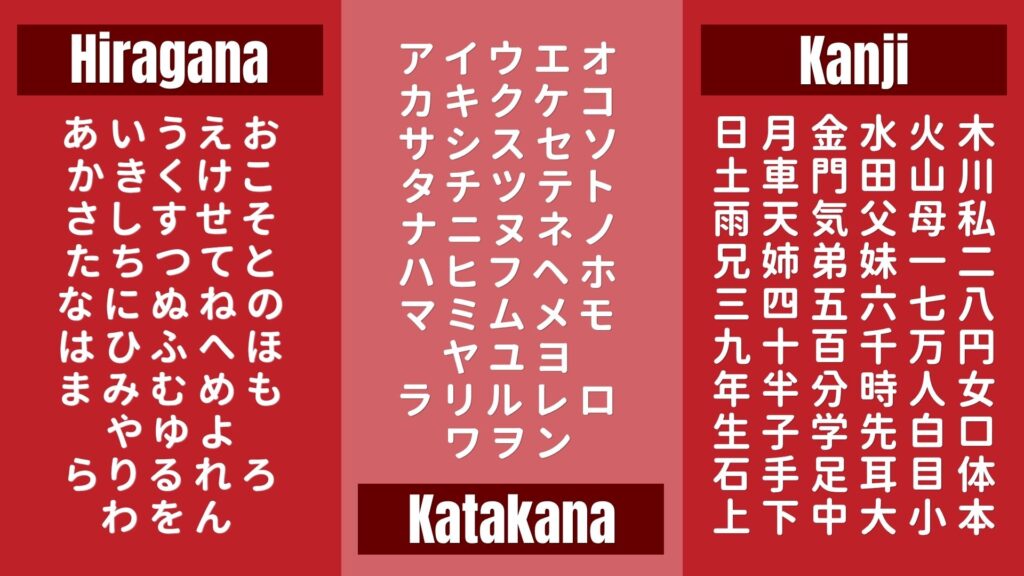
For example:
| Word | Writing Type |
|---|---|
| ありがとう | hiragana |
| コーヒー | katakana |
| 学校 | kanji |
| 日本語 | kanji |
| テレビ | katakana |
This kind of awareness helps beginners become more comfortable with Japanese writing.
If you are still learning the writing system, JLRC’s Hiragana and Katakana Beginner Guide can help you understand where to start.
Common N5 Vocabulary Categories
To make N5 vocabulary easier, beginners can group words by topic.
This helps learners remember words more naturally.
1. People and Family
Examples:
| Japanese | Romaji | Meaning |
|---|---|---|
| 私 | watashi | I / me |
| 友達 | tomodachi | friend |
| 家族 | kazoku | family |
| 母 | haha | mother |
| 父 | chichi | father |
| 子ども | kodomo | child |
2. Time and Dates
Examples:
| Japanese | Romaji | Meaning |
|---|---|---|
| 今日 | kyou | today |
| 明日 | ashita | tomorrow |
| 昨日 | kinou | yesterday |
| 今 | ima | now |
| 朝 | asa | morning |
| 夜 | yoru | night |
3. Places
Examples:
| Japanese | Romaji | Meaning |
|---|---|---|
| 家 | ie | house |
| 学校 | gakkou | school |
| 会社 | kaisha | company |
| 駅 | eki | station |
| 店 | mise | store |
| 病院 | byouin | hospital |
4. Basic Verbs
Examples:
| Japanese | Romaji | Meaning |
|---|---|---|
| 行きます | ikimasu | go |
| 来ます | kimasu | come |
| 食べます | tabemasu | eat |
| 飲みます | nomimasu | drink |
| 見ます | mimasu | see / watch |
| 聞きます | kikimasu | listen / ask |
5. Basic Adjectives
Examples:
| Japanese | Romaji | Meaning |
|---|---|---|
| 大きい | ookii | big |
| 小さい | chiisai | small |
| 新しい | atarashi | new |
| 古い | furui | old |
| 暑い | atsui | hot |
| 寒い | samui | cold |
Learning vocabulary by category helps students review more efficiently.
Common Problems Beginners Face
Many beginners face the same problems when studying N5 vocabulary and kanji.
They may memorize many words but forget them quickly. They may know the meaning of a word but cannot recognize it in listening. They may know a kanji alone but cannot read it inside a word.
Common problems include:
- memorizing words without example sentences
- forgetting kanji readings
- depending too much on romaji
- studying vocabulary but not listening
- learning kanji one by one without word examples
- not reviewing regularly
- confusing similar-looking kanji
- studying random lists without a clear plan
These problems are normal, but they can slow down progress.
This is why beginners need a structured learning system.
How to Study JLPT N5 Vocabulary Effectively
To study N5 vocabulary effectively, beginners should focus on repeated exposure.
It is not enough to see a word once. Learners need to read it, hear it, use it, and review it many times.
A good study method may include:
- learning words by topic
- reading example sentences
- listening to simple conversations
- writing short sentences
- reviewing old words regularly
- practicing with JLPT-style questions
- using words in class or speaking practice
For example, instead of only memorizing:
駅 = station
Students should practice:
駅はどこですか。
Eki wa doko desu ka.
Where is the station?
This helps vocabulary become practical.
How to Study JLPT N5 Kanji Effectively
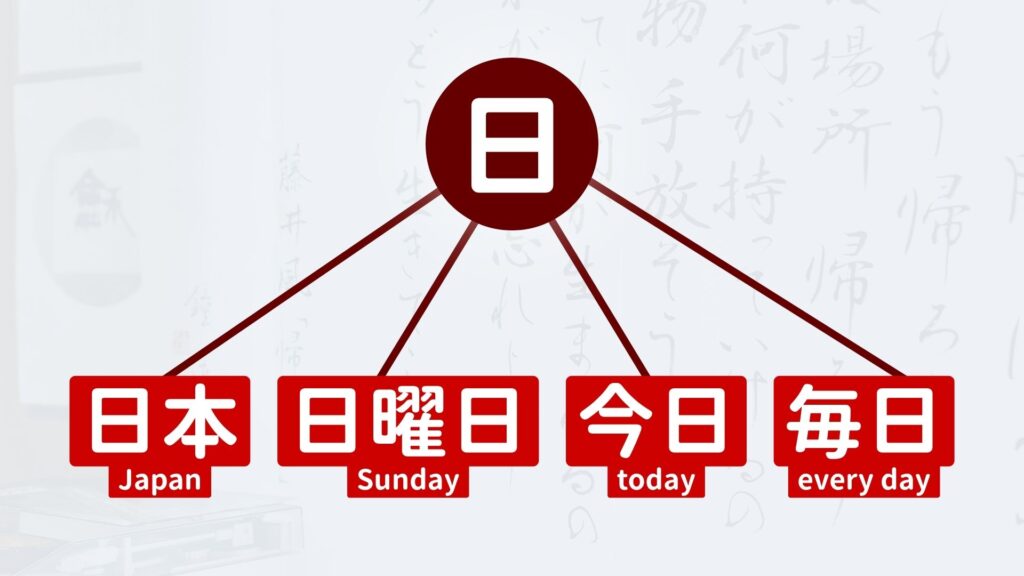
Kanji should also be studied with context.
Beginners should not only memorize shape and meaning. They should learn how each kanji appears in real words.
A useful method is:
- Learn the basic meaning of the kanji
- Learn common words using that kanji
- Read short example sentences
- Review the kanji regularly
- Practice recognizing it in reading passages
For example:
日 can appear in:
- 日本 — Japan
- 日曜日 — Sunday
- 今日 — today
- 毎日 — every day
Students should practice:
This helps students understand that kanji is not just a symbol. It is part of real Japanese vocabulary.
Why Romaji Is Not Enough
Romaji can help beginners at the very beginning, but students should not depend on it too much.
Japanese is normally written with hiragana, katakana, and kanji. If learners only study romaji, they may struggle when reading textbooks, JLPT questions, signs, menus, or simple Japanese texts.
At N5 level, students should gradually become comfortable reading Japanese scripts.
This does not mean you must master kanji immediately. But you should slowly reduce dependence on romaji and practice reading Japanese characters more often.
This is one reason why structured beginner lessons are helpful.
Why Structured Lessons Help Beginners
JLPT N5 vocabulary and kanji are the foundation of Japanese learning.
If beginners study randomly, they may learn many words but still struggle to build sentences, understand listening questions, or read short passages.
Structured lessons help students learn in a better order.
A good N5 learning path should connect:
- hiragana and katakana
- basic vocabulary
- basic kanji
- grammar
- particles
- sentence patterns
- reading
- listening
- speaking practice
- regular review
JLRC’s JLPT N5 Japanese language course helps beginners build Japanese step by step through organized lessons.
The goal is not only to memorize vocabulary and kanji, but to understand how they work in real Japanese sentences.
With structured learning, students can make clearer progress with less wasted time.
Learn N5 Vocabulary and Kanji with JLRC
JLRC supports beginners who want to study Japanese properly from the foundation.
Through structured lessons, students can learn vocabulary, kanji, grammar, reading, listening, and useful expressions in a clear order. This helps learners avoid random study and build confidence step by step.
JLRC also develops Japanese learning materials to support systematic study and clearer progress. You can learn more here: Japanese learning materials.
Students who want to know more about JLRC’s Japanese language education in the Philippines can visit: Japanese language education.
JLRC also welcomes international students who want to study Japanese online.
Build a Strong N5 Foundation
JLPT N5 vocabulary and kanji may look basic, but they are very important.
They help learners understand simple sentences, beginner conversations, short reading passages, and basic JLPT questions.
To study effectively, beginners should not memorize random lists only. They should learn vocabulary and kanji together with grammar, pronunciation, listening, and reading.
A strong N5 foundation makes it easier to continue to N4, N3, and higher levels.
FAQ
What vocabulary do I need for JLPT N5?
JLPT N5 vocabulary includes basic words for greetings, family, numbers, time, food, school, work, places, transportation, hobbies, and simple daily situations.
Should I learn vocabulary or kanji first?
Beginners should learn vocabulary and kanji together. It is helpful to study kanji through common words, such as 学校, 学生, 日本, and 日本語.
Is romaji enough for JLPT N5?
Romaji may help at the beginning, but it is not enough. Learners should gradually become comfortable reading hiragana, katakana, and basic kanji.
How can I remember N5 vocabulary and kanji better?
Study words by topic, use example sentences, review regularly, listen to simple Japanese, and practice reading short passages. Repeated exposure is more effective than memorizing random lists once.
Does JLRC offer a JLPT N5 course?
Yes. JLRC offers a structured JLPT N5 Japanese language course for beginners. Students can explore JLRC’s course options here: JLRC Japanese language courses.




Copyright © 2026 JLRC Inc.
All Rights Reserved
For international students, you may visit our Learn Japanese Online page.
For inquiries, you may call us at (63)2-7358-0565 or (63)917-163-3371
Japanese Language Research Center
Unit 506 Cityland Shaw Tower, Shaw Blvd, Mandaluyong, 1552 Metro Manila, Philippines
For international students, you may visit our Learn Japanese Online page.
For inquiries, you may call us at (63)2-7358-0565 or (63)917-163-3371
Japanese Language Research Center
Unit 506 Cityland Shaw Tower, Shaw Blvd, Mandaluyong, 1552 Metro Manila, Philippines
Copyright © 2026 JLRC Inc.
All Rights Reserved