
JLRC Blogs
- Courses
- Study Japan
- Materials
- Community
- About
- FAQ's
- Careers
- Class Details
- Login


Japanese Language Learning Center for JLPT Review in the Philippines: What to Look For Before Enrolling
JLRC - Content Team 2026/07/03

Preparing for the JLPT can feel overwhelming, especially if you are not sure what to study first.
Should you focus on grammar? Should you memorize more vocabulary? Do you need more listening practice? Is self-study enough? Or should you join a JLPT review center?
For many learners in the Philippines, choosing the right JLPT review center can make preparation clearer, more organized, and more effective.
The JLPT is not only a vocabulary test. It checks how well you understand grammar, reading, listening, kanji, and overall Japanese comprehension. That is why good preparation should not be random
A good review program should help you study with structure, understand your weak points, and prepare for the test with a clear learning path.
JLRC offers structured JLPT courses from N5 to N1 for learners who want to build Japanese ability step by step.
Table of Contents
Why JLPT Review Matters
Many students prepare for the JLPT by using apps, YouTube videos, textbooks, or practice tests.
These can be helpful, but self-study can become confusing if you do not have a clear plan.
Some learners study vocabulary but ignore listening. Some focus on grammar but do not practice reading. Others take practice tests but do not understand why they made mistakes.
This is where JLPT review becomes important.
A structured review class helps learners:
- understand what each JLPT level requires
- review grammar, vocabulary, kanji, reading, and listening
- identify weak areas
- practice with teacher guidance
- follow a clear study sequence
- avoid wasting time on random study
JLPT review should not only help you answer test questions. It should help you build the Japanese ability needed for that level.
JLPT Review Center vs. Self-Study
Self-study can work for some learners, especially if they are disciplined and already know how to organize their study plan.
However, many learners struggle because the JLPT has several skill areas.
For example, you may know many words but still struggle with reading speed. You may understand grammar in a textbook but fail to recognize it in a passage. You may pass written practice exercises but feel lost during listening questions.
A JLPT review center can help by giving learners a more complete preparation system.
| Self-Study | Main Role |
|---|---|
| Flexible but easy to lose direction | Structured learning path |
| Depends on learner discipline | Teacher guidance and class schedule |
| May focus too much on one skill | Balanced grammar, vocabulary, reading, and listening |
| Mistakes may not be corrected clearly | Easier to understand weak points |
| Can be low cost | Can save time through clearer direction |
Self-study is not bad. But if your goal is to prepare more efficiently, a structured review class can help you avoid unnecessary confusion.
What to Look for in a JLPT Review Center
Before choosing a Japanese language training provider, companies should check several important points.
1. Does the Center Offer the Right JLPT Level?
Not all learners need the same review.
A beginner may need N5 foundation. A continuing learner may need N4 or N3 preparation. A career-focused learner may aim for N2 or higher.
Choose a center that can support your current level and help you continue to the next level.
2. Is the Review Structured or Random?
A good JLPT review program should not be only a collection of practice questions.
It should have a clear structure.
For each level, learners need to build:
- grammar
- vocabulary
- kanji
- reading comprehension
- listening comprehension
- test familiarity
Random practice may help a little, but structured lessons help learners understand how the skills are connected.
3. Are Learning Materials Clear and Useful?
Good materials are important for JLPT preparation.
Learners need materials that help them review lessons, practice skills, and understand what to study next.
At JLRC, students use its original Japanese learning materials designed to support structured Japanese study and JLPT-based progress.
The right materials can help learners avoid scattered study and focus on what matters for their level.
4. Are the Instructors Able to Explain Clearly?
JLPT review is not only about giving answers.
Students need to understand why an answer is correct, why another answer is wrong, and how grammar or vocabulary works in real sentences.
Clear teacher explanations are especially important for Filipino learners because Japanese sentence structure is very different from English and Filipino languages.
A good instructor should help learners understand Japanese step by step, not simply tell them to memorize.
5. Does the Program Help You Progress Faster?
For many learners, time is important.
Some students need JLPT for career growth. Some need Japanese for work. Some need it for study in Japan. Others want to move to the next level as soon as possible.
This is why faster and clearer progress matters.
At JLRC, the focus is on helping learners study Japanese with less wasted time through structured JLPT courses, original materials, and level-based learning.
Faster progress does not mean skipping the foundation. It means studying in a more organized way so learners can move toward their goals more efficiently.
Students who want to understand this learning approach can read JLRC’s guide on how to learn Japanese faster with structured lessons.
Examples of JLPT Review Options in the Philippines
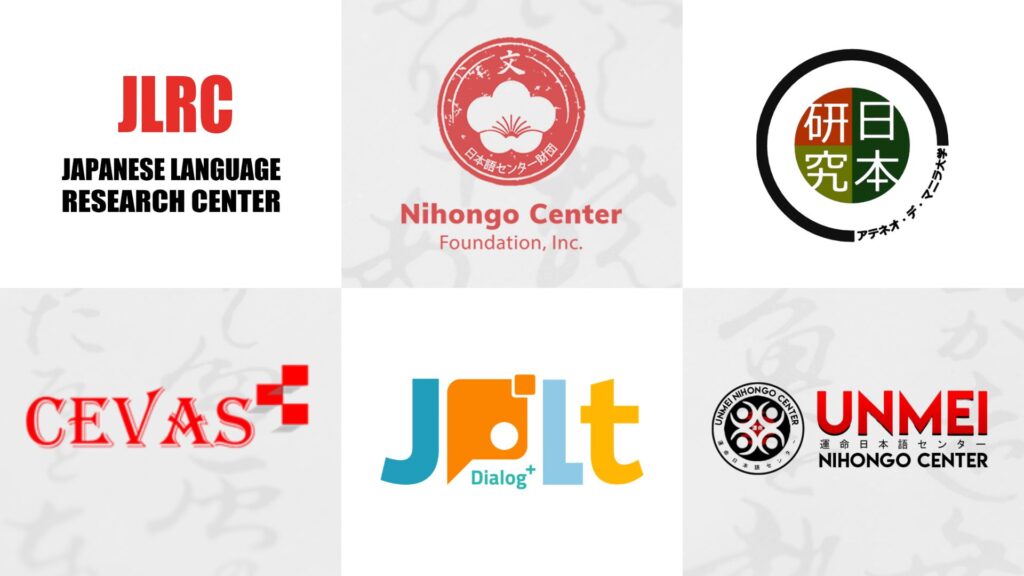
There are several Japanese language schools and review options in the Philippines for learners preparing for the JLPT. Examples include;
JLRC Japanese Language Research Center Nihongo Center Foundation / PIJLC Ateneo Japanese Studies Program CEVAS Japanese Language Center JPLT Online Japanese School UNMEI Nihongo Center.
Each provider may have different strengths, schedules, levels, class formats, and review styles. Some focus on structured JLPT courses, some offer short review classes, and others provide online or flexible learning options.
Because course details, tuition, schedules, and available JLPT levels may change, learners should always check the latest information directly with each provider before enrolling.
For individual learners who want to understand how Japanese can support career growth, JLRC also has a guide on Japanese skills for career growth.
Review by Level: N5 to N1
Each JLPT level has a different purpose.
However, many learners struggle because the JLPT has several skill areas.
For example, you may know many words but still struggle with reading speed. You may understand grammar in a textbook but fail to recognize it in a passage. You may pass written practice exercises but feel lost during listening questions.
A JLPT review center can help by giving learners a more complete preparation system.
| Level | Main Focus |
|---|---|
| N5 | Basic foundation |
| N4 | Beginner continuation |
| N3 | Intermediate bridge |
| N2 | Stronger academic and professional Japanese |
| N1 | Advanced Japanese comprehension |
If you are a complete beginner, you usually need to start from N5.
If you already completed N5, you may prepare for N4. If you are moving from N4 to N3, you need stronger reading and listening practice. If you are aiming for N2 or N1, you need more advanced vocabulary, kanji, grammar, and comprehension skills.
For learners moving up after N5, JLRC also has a JLPT N4 Study Guide.
For learners preparing for the intermediate level, you may also read JLRC’s JLPT N3 Study Guide.
Is Online JLPT Review Effective?
Yes, online JLPT review can be effective if the class is live, structured, and interactive.
Online review classes are ideal for learners who live outside Metro Manila, have busy schedules, or prefer the convenience of studying from home while avoiding heavy traffic.
However, online review should still include:
- teacher guidance
- regular class participation
- structured lessons
- listening and reading practice
- review support
- learning materials
- clear progress through the level
Online study is convenient, but convenience alone is not enough. The program must still be organized and interactive.
Choose a JLPT Review Center with a Clear Learning Path
The JLPT can be difficult if you study without direction. A good JLPT review center should help you understand your level, strengthen your weak points, and prepare with a clear plan.
Before enrolling, check if the program offers:
- the JLPT level you need
- structured lessons
- clear learning materials
- trained instructors
- reading and listening practice
- online or flexible learning options
- a path to continue to the next level
With the right support, JLPT preparation becomes more organized, more motivating, and more effective.
For learners looking for structured JLPT preparation, JLRC Japanese language school offers JLPT courses from N5 to N1, supported by trained instructors, original materials, and a focus on faster progress with less wasted time.




Copyright © 2026 JLRC Inc.
All Rights Reserved
For international students, you may visit our Learn Japanese Online page.
For inquiries, you may call us at (63)2-7358-0565 or (63)917-163-3371
Japanese Language Research Center
Unit 506 Cityland Shaw Tower, Shaw Blvd, Mandaluyong, 1552 Metro Manila, Philippines
For international students, you may visit our Learn Japanese Online page.
For inquiries, you may call us at (63)2-7358-0565 or (63)917-163-3371
Japanese Language Research Center
Unit 506 Cityland Shaw Tower, Shaw Blvd, Mandaluyong, 1552 Metro Manila, Philippines
Copyright © 2026 JLRC Inc.
All Rights Reserved